

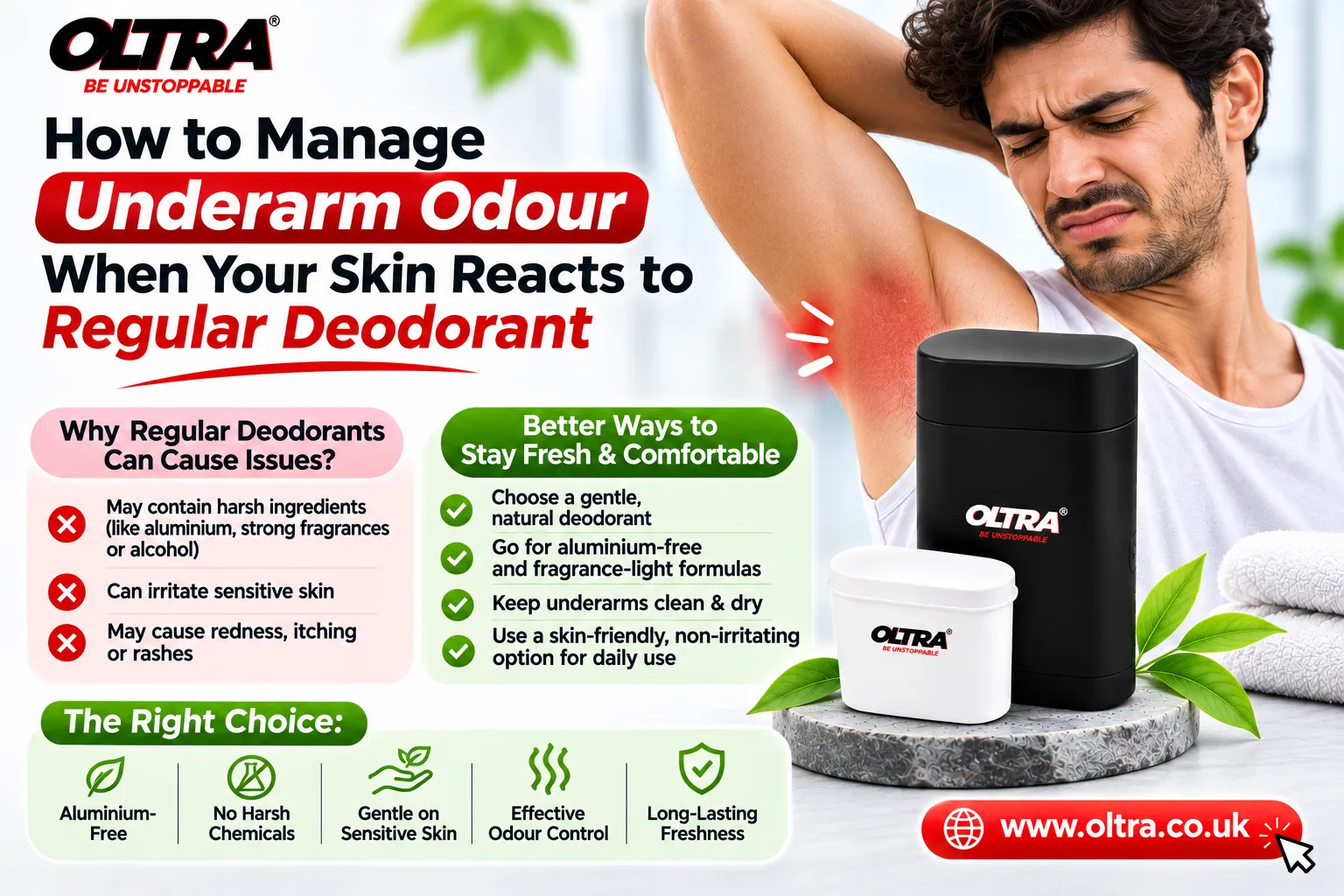
It’s a frustrating trap. You need deodorant to feel confident, but the one you use leaves your underarms itchy, red or stinging. Stop using it and you worry about odour. Keep using it and your skin gets worse.
Switching brands doesn’t always help either, because many products share the same core ingredients. You can go through five different sticks and end up exactly where you started.
The good news is that staying fresh and keeping your skin calm aren’t opposites. If you’re looking at natural deodorant uk options, the most useful thing you can do is understand two things: what really causes odour, and what in your current product is upsetting your skin.
Why Your Regular Deodorant May Be the Problem
Underarm skin has a tough job. It’s constantly moving, often damp and rubbed by clothing all day. Shaving adds to the strain by disturbing the skin’s protective barrier, so anything applied soon after can sting.
Many everyday deodorants contain fragrance, drying alcohols or other ingredients that sensitive skin doesn’t tolerate well.
How a Reaction Usually Shows Up
Watch for:
-
Itching soon after applying, or building through the day
-
Red, inflamed patches where the product touches your skin
-
Burning or stinging, especially after shaving
-
Dry, rough or tight skin that may flake
-
A rash or small bumps that keep coming back
These are typical signs of irritant or allergic contact dermatitis. Underarm rashes can have other causes too, though, so if symptoms keep returning it’s worth getting them checked.
Where Underarm Odour Really Comes From
It’s natural to blame sweat, but fresh sweat has very little smell. Odour forms when bacteria living on your skin break down substances in sweat and skin oils. Understanding this changes how you tackle it.
Warmth, Moisture and Bacteria
Your underarms are warm and damp, which is exactly what odour-causing bacteria like. Regular washing removes sweat, bacteria and leftover product. That said, scrubbing hard or washing too often can irritate sensitive skin, so gentle is better.
What You Wear
Tight tops and synthetic fabrics trap moisture, especially during exercise or hot weather. Smells can also linger in clothes after you’ve showered, which can make it seem as though your deodorant isn’t working when the real issue is your shirt.
Hormones, Stress and Diet
Stress, hormonal shifts, activity levels and some foods can all affect how strong body odour is. Knowing this helps you manage freshness without reaching for ever-stronger products.
Is Aluminium-Free Deodorant Worth Trying?
If antiperspirants leave your skin sore, an aluminium free deodorant is a logical next step. Just be clear on how it differs.
Antiperspirants use aluminium salts to temporarily reduce how much sweat reaches the skin. Aluminium-free deodorants don’t reduce sweat. They focus on the smell instead, working to neutralise odour, discourage odour-causing bacteria or absorb a little surface moisture, depending on the formula.
Aluminium-Free Isn’t the Same as Irritation-Free
This catches a lot of people out. A product can be free of aluminium and still contain fragrance, baking soda or other ingredients that trigger a reaction. One claim on the front of the pack doesn’t tell you how the whole formula will behave on your skin.
Ingredients Worth Watching
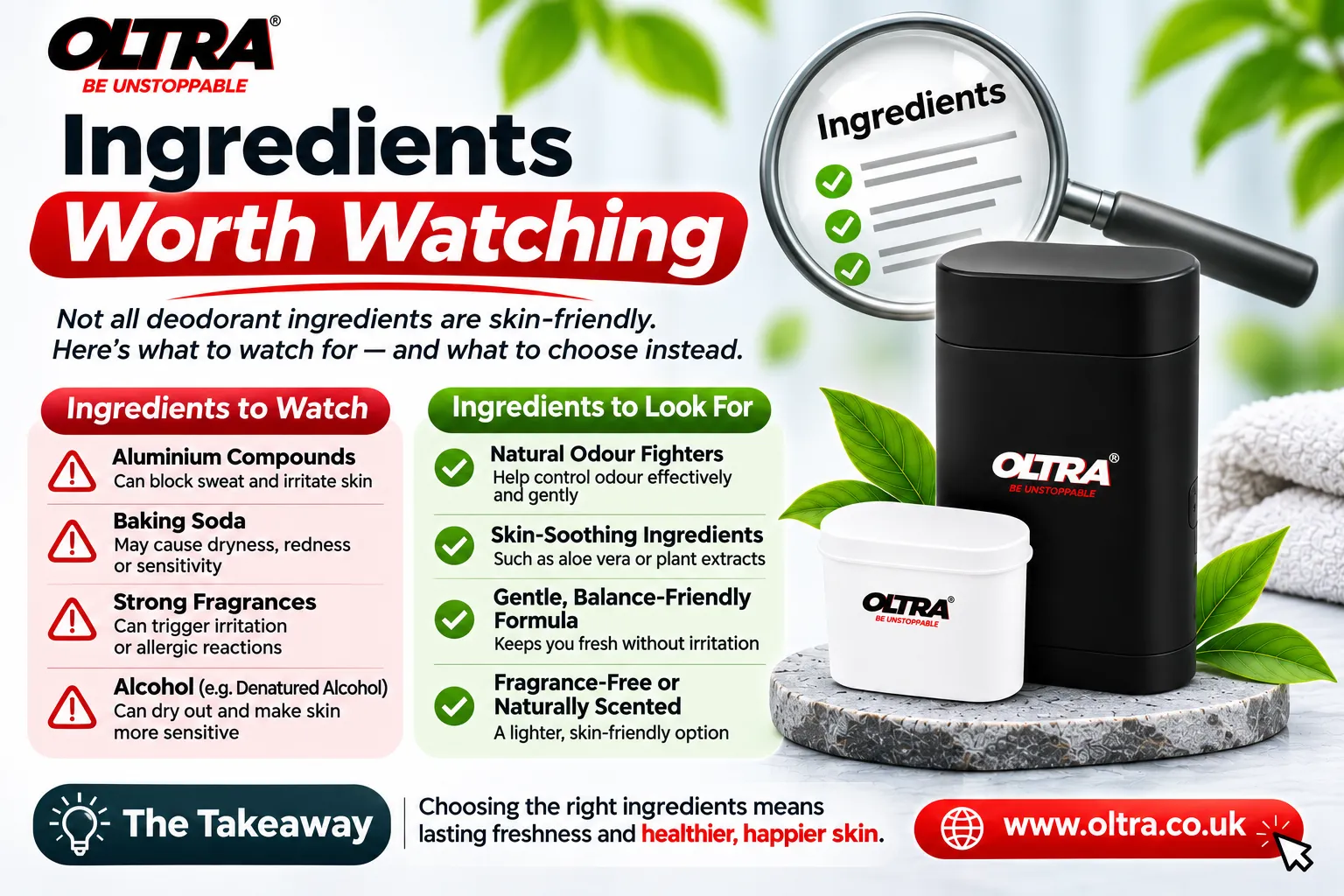
When a deodorant keeps causing trouble, knowing the common culprits helps you narrow things down.
Fragrance and essential oils. Perfume is a well-known cause of allergic contact dermatitis, and plant-based oils can be just as reactive for some people. If scented products bother you, try fragrance-free.
Sodium bicarbonate. Baking soda helps control odour in many natural deodorants. Plenty of people use it without problems, but others get itching or redness. A bicarbonate-free formula is a good alternative if you suspect it.
Alcohol, preservatives and plant extracts. Some alcohol-based formulas sting on freshly shaved or damaged skin. Certain preservatives and botanical extracts can also cause reactions.
Remember, no ingredient list can promise to suit every single person.
Choosing a Sensitive Skin Deodorant
The best sensitive skin deodorant isn’t the strongest one on the shelf. It’s the one that controls odour while avoiding the things your skin dislikes.
Rule out your known triggers. If fragrance or baking soda has caused problems, choose a formula without them.
Read past the marketing. “Natural”, “organic” and “aluminium-free” don’t automatically mean gentle. Check the ingredient list against anything that has bothered you before.
Think about how you apply it. Heavy layers or rubbing product into sore skin can make irritation worse. Follow the brand’s instructions.
Test it first. Apply a little to healthy, unbroken skin for a couple of days before using it every day. If you’ve had serious allergic reactions in the past, get professional advice before trying new products.
A Gentle Daily Routine for Fresher Underarms
Deodorant is only part of the picture. These habits do a lot of the work for you:
-
Wash gently with a mild, unperfumed cleanser.
-
Dry fully before getting dressed.
-
Choose breathable fabrics that suit the weather and what you’re doing.
-
Change out of sweaty clothes after exercise or a physical day.
-
Wash clothes properly, as trapped odour in fabric can undo a fresh shower.
-
Leave irritated skin alone until it has healed.
If a product keeps causing irritation, stop using it. Applying more to make up for weak odour control usually makes things worse.
Why Choose Us?
OLTRA Guard was created for people who want a natural, aluminium-free way to stay fresh without putting their skin through the wringer.
-
Aluminium-free odour control. OLTRA Guard targets odour rather than blocking sweat, so your body can sweat naturally.
-
Standard and Bi-Carb-Free formulas. If baking soda doesn’t suit you, our Bi-Carb-Free option leaves it out.
-
Fragrance-free Core or scented. Choose our fragrance-free Core, or pick from our scented options if you prefer a light fragrance.
-
Reusable applicator. Keep the applicator and swap in replaceable refills instead of buying a new container every time.
-
Choice that fits your skin. With several formulas to pick from, you can choose the one that suits your ingredient preferences.
Every person’s skin is different, so check the full ingredient list and test a small area before regular use.
When to Get Professional Advice
Mild discomfort often eases once you stop using the product causing it. But speak to a pharmacist, GP or dermatologist if you have:
-
Itching that doesn’t settle
-
Redness that spreads
-
Cracked or broken skin
-
Rashes that keep returning
A sudden, unexplained change in body odour, or unusually heavy sweating, is also worth getting checked.
Frequently Asked Questions
Can you control body odour without antiperspirant?
Yes. Deodorants manage smell without reducing sweat. Good hygiene, breathable clothing and washing clothes properly also make a big difference.
Is natural deodorant always better for sensitive skin?
No. Essential oils and baking soda are natural but can still cause irritation. The full formula and how your skin responds matter most.
Should you apply deodorant straight after shaving?
It’s better to wait. Freshly shaved skin is more sensitive, so give it time to settle. Shaving at night and applying deodorant in the morning works well for many people.
Why do my clothes still smell after I shower?
Odour can build up in fabric, especially synthetics, and survive a normal wash. Washing sportswear promptly and choosing breathable materials can help.
Can stress make underarm odour worse?
Yes. Stress can trigger a different kind of sweat that bacteria break down more readily, which can make odour more noticeable.
Final Thoughts
When your skin reacts to regular deodorant, the answer isn’t to give up on staying fresh. It’s to understand what’s causing the reaction and build a routine that works for your skin.
Look out for common irritants, keep your washing and clothing habits simple and introduce new products carefully. Fragrance-free, bicarbonate-free and aluminium-free options are all worth exploring, but the right choice is always the one that suits your own skin.